
In Quebec, your customers use ChatGPT, Gemini and Google in both French and English. Being visible in AI responses in both languages is therefore essential: a business mentioned in French won’t necessarily appear in English, and vice versa.
Try asking your preferred AI tool: “Quelle agence recommandes-tu pour [votre service] à Montréal?” Then ask: “Which agency do you recommend for [your service] in Montreal?” Compare the businesses mentioned and the sources shown.
Why Answers Change Depending on the Language
AI assistants build their answers using pages they find and consider trustworthy. When a question is asked in French, they often favour French-language sources, and the reverse is also true. This has three implications:
- Content in only one language can limit your visibility. If your service pages, FAQ and pricing are available only in English, AI tools have less French-language content to draw on when presenting your business.
- The sources consulted vary by language. Directories, rankings and “best agencies” articles may feature different businesses in French and English.
- Incomplete technical signals can hurt your bilingual SEO. Properly configured hreflang tags, along with translated titles and meta descriptions, help search engines identify and display the appropriate language version of your pages.
Three Areas to Work On in Both Languages
1. SEO: Get found. Every important page should be available in French and English, with its own title, meta description and H1 in each language. The two versions should be linked using hreflang tags (fr-CA, en-CA).
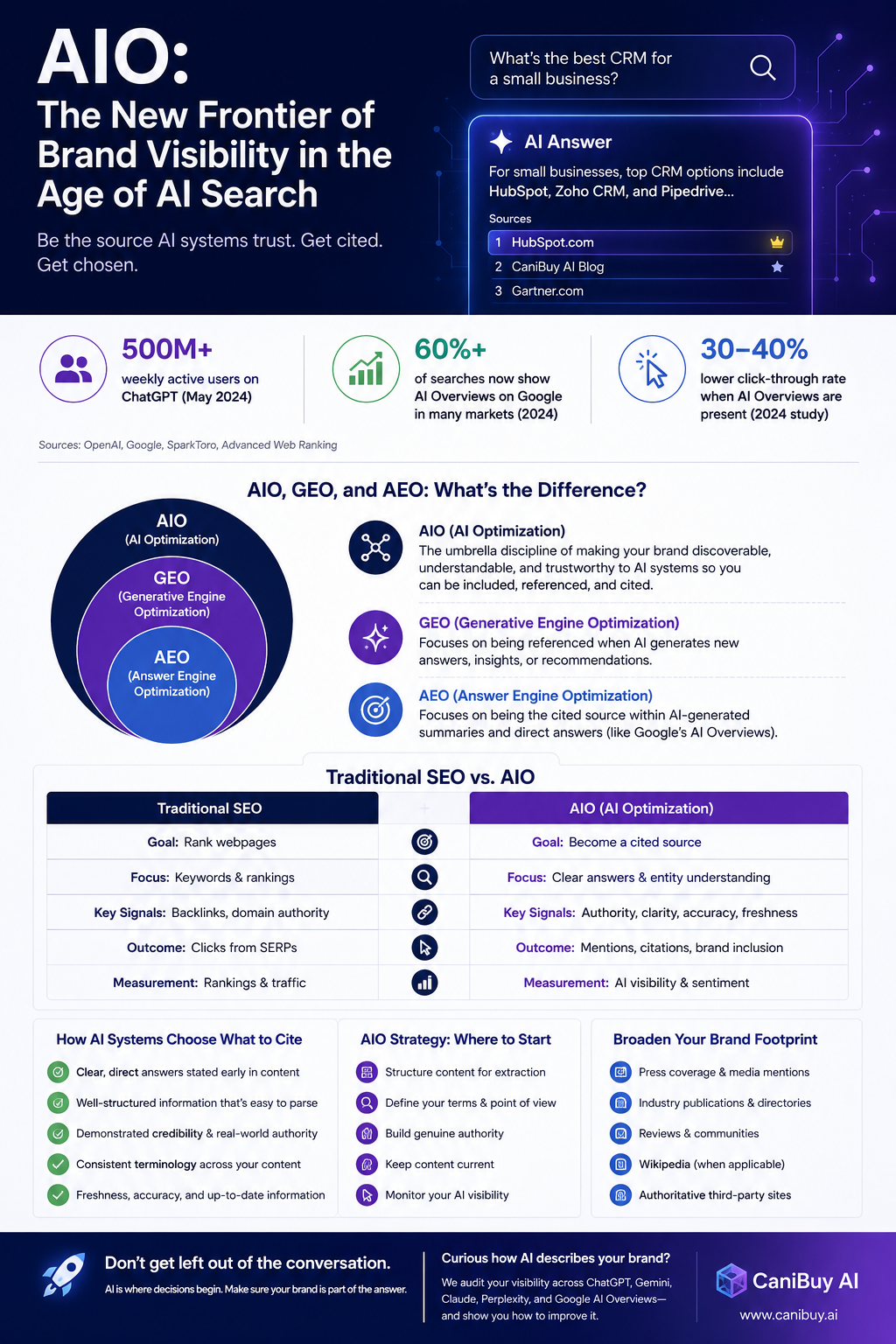
2. GEO: Get cited. GEO (Generative Engine Optimization) involves providing clear answers that AI can draw on in its responses. Examples include an FAQ in each language, published prices or price ranges, pages that directly answer your customers’ questions, and mentions on third-party sites—such as directories, review sites and articles—in both languages. It is the foundation of AI visibility.
3. AXO: Make your content readable by AI agents. AXO (AI agent optimization) focuses on structure: structured data (schema), an llms.txt file summarizing your business in French and English, and consistent business details everywhere (name, address and phone number). See our AI SEO solutions.
How to Check Your Bilingual AI Visibility in 15 Minutes
- Choose three questions your customers actually ask.
- Ask them in French, then in English, using ChatGPT, Perplexity and Google (AI Overviews).
- Record whether your business is mentioned, which sources are cited and whether your contact information is accurate.
- Compare the results: when your business is missing from an answer in one language, check which pages or directories are cited instead.
The Most Common Mistakes
- A machine-translated English version without adapted titles or meta descriptions.
- An FAQ available in only one language.
- A phone number or address that varies from one page to another.
- Duplicate pages at old URLs that compete with one another.
FAQ
Does AI really answer differently in French and English?
Often, yes, because it draws on sources available in the language of the question. If your content exists in only one language, your chances of being cited in the other decrease.
Do I need to translate my entire website?
Not necessarily. Start with the pages that generate the most traffic, such as your homepage, core service pages, FAQ, pricing and contact information.
What is an llms.txt file?
It is a text file placed at the root of your website that introduces your business and key pages to AI tools. It should link to the correct URLs in each language.
How long does it take to see results?
That depends on your website and the competition. Technical fixes can be made quickly, while getting cited by AI requires content and external mentions built up over several months.
Is Your Business Visible in Both Languages?
Want to know what ChatGPT and Google say about your business in French and English? Schedule a 15-minute call with our Montreal team: Schedule a call